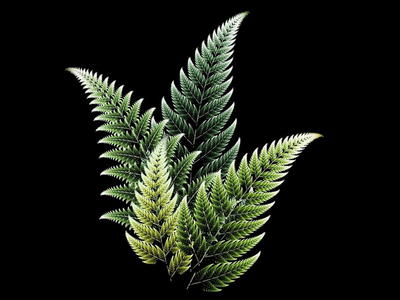
This figure is a fractal. A fractal is a figure, any figure that is repeated an infinite number of times.
A small fragment of any fractal contains a figure that is identical to the entire fractal.
KOCH CURVE
In 1904 the Swedish mathematician Niels F. Helge von Koch (1870-1924) built the curve bears his name.
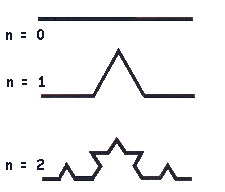
part of a unit segment [0.1], polygonal P0, which divides into three parts by replacing the central part of the two segments which, together with that part (aside), would form a triangle equilateral. This gives the polygon P1.
then repeats the process with each of the resulting parts and obtain the polygon P2. This process is repeated indefinitely obtained at each stage k a traverse length (4 / 3) k.
Koch curve is defined as the boundary of the polygonal curve Pk when k tends to infinity.
A chart helps us understand this concept:
To create a Koch curve click at.
http://omnis.if.ufrj.br/ ~ carlos / applets / koch / koch.html
KOCH ISLAND
If the initiator the process is an equilateral triangle generator is used as the Koch curve is obtained Koch Island or Snowflake when n increases indefinitely.


Then other mathematicians set out to create variations Snowflake. Let's see:


are also some well known fractals were created by the Polish mnatemático Sierpinspi Waclaw (1882-1969) in 1915. Here they are:


But there are far more complex fractals. Want to build a fractal? Here's the program DESCARTES:
http://descartes.cnice.mecd.es/Geometria/fractales_igl/fractales.htm
Want to introduce you within a fractal? It will be an unforgettable trip!
http://www.fractalus.com/info/zoom.htm
This rose is a fractal. Watch it carefully:


0 comments:
Post a Comment